Marine Program

Foto: José Tomás Yakasovic

Marine Program

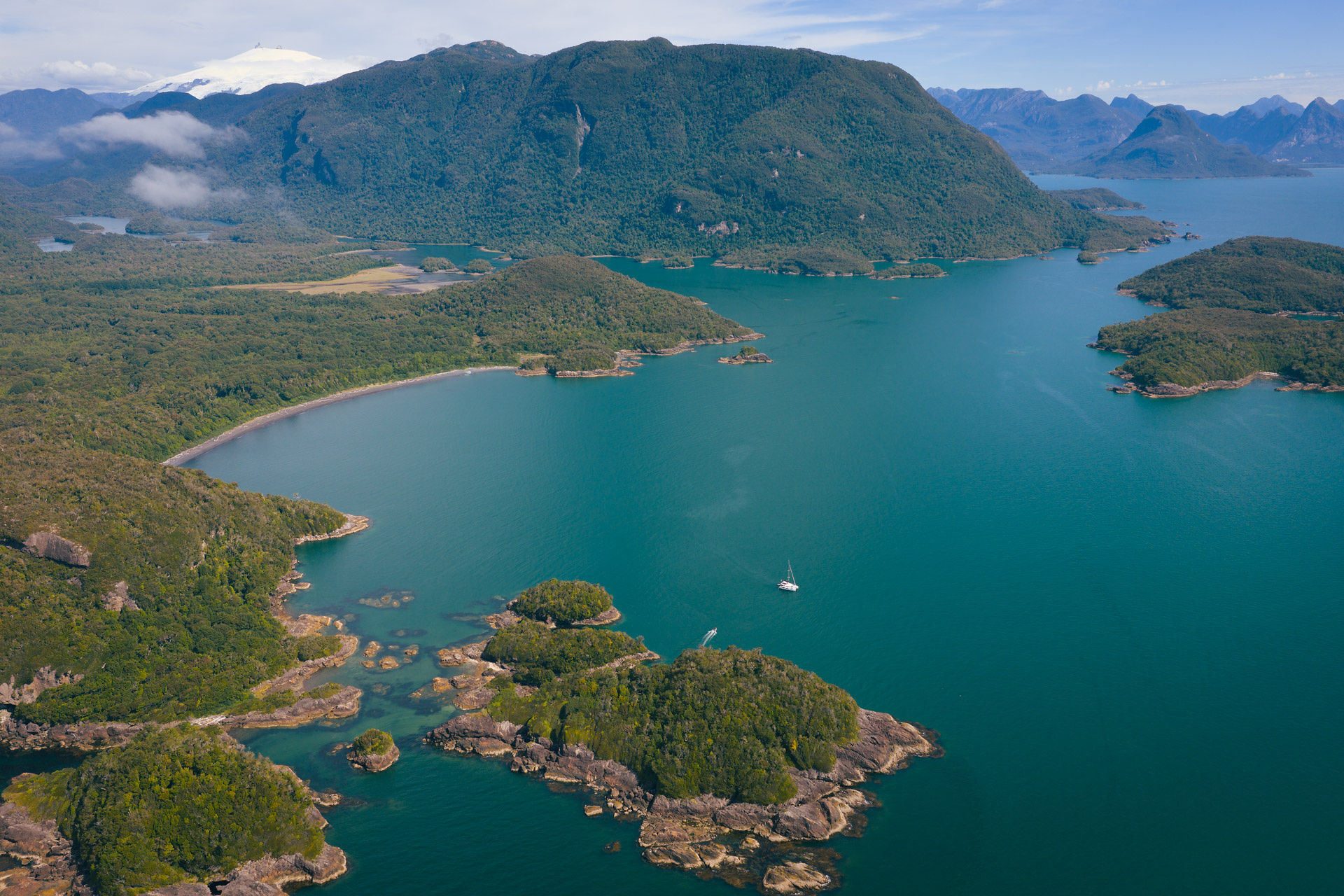
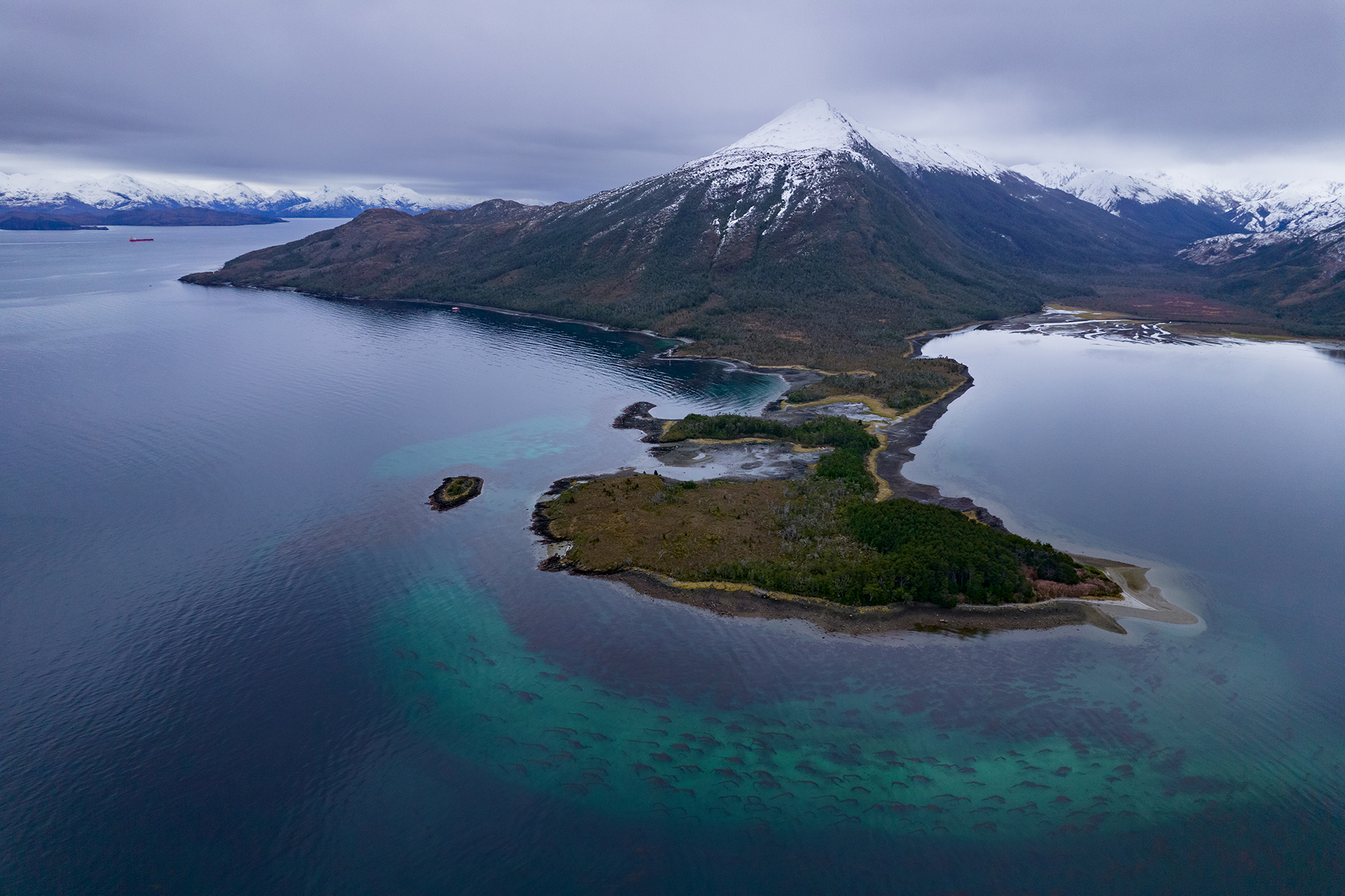
Chilean Patagonia is home to one of the largest fjord ecosystems on the planet, with nearly 84,000 km of coastline —more than twice the Earth’s circumference.

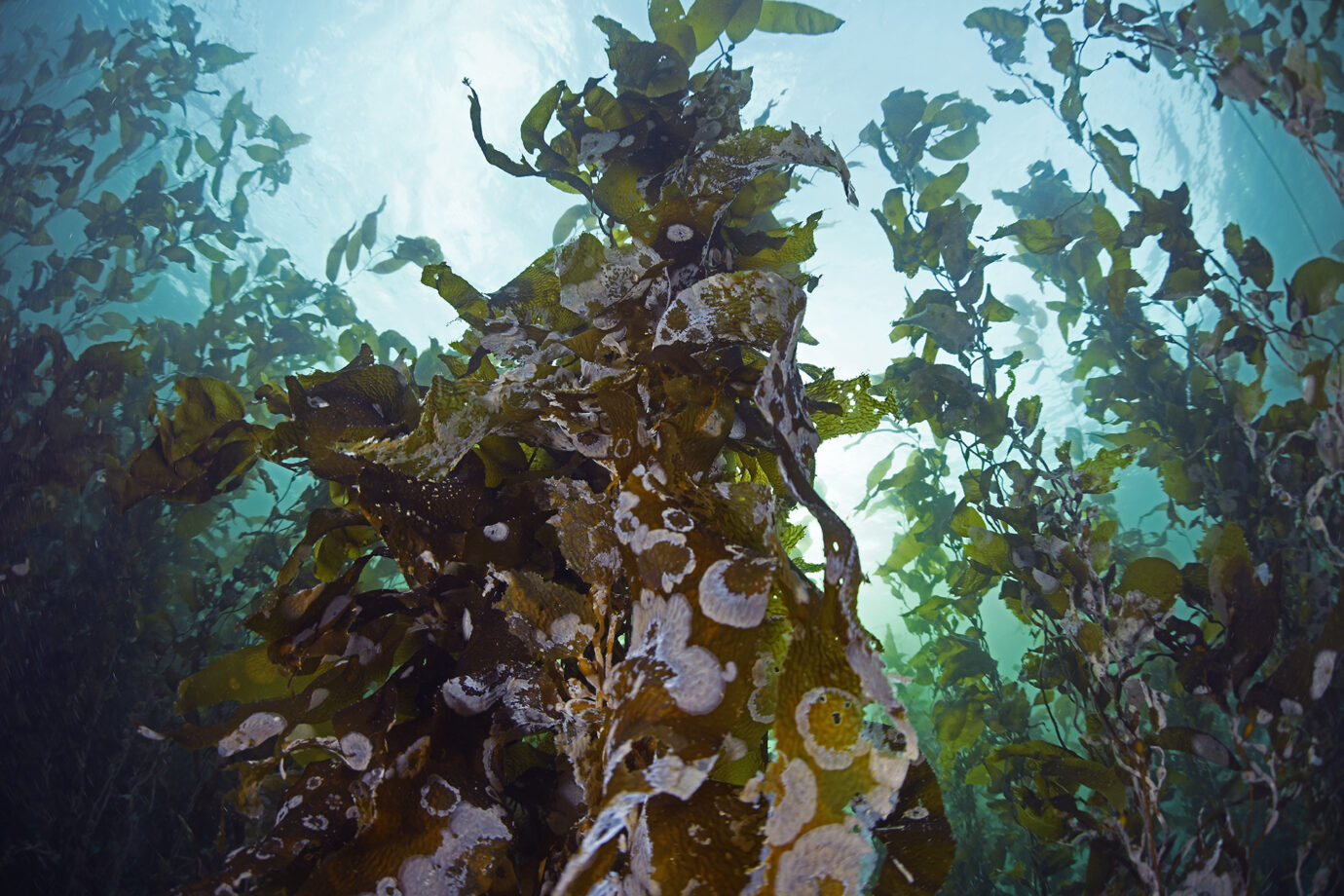
Nutrient-rich sediments carried by glacial meltwater and rivers shape an ecosystem of remarkable biodiversity, providing habitat for numerous species: the red hydrocoral (Errina antarctica), a vulnerable and key indicator of ecosystem health; the sei whale (Balaenoptera borealis); and the icefish (Champsocephalus esox), endemic to southern Patagonia —both of them endangered. These seascapes are also home to towering giant kelp forests (primarily Macrocystis pyrifera), one of the most resilient and productive habitats on the planet. In Patagonia, these forests remain virtually untouched, unlike other parts of Chile where kelp is commercially harvested.

While Chile has made significant strides in establishing marine protected areas — with 42% of its ocean under some form of protection — less than 1% of Patagonia’s coastal ecosystems between Puerto Montt and Cape Horn are strictly safeguarded. Through our Marine Program, we are working to increase that protection from 1% to 10%, ensuring the continuity of ecological processes and a healthy ocean with fully functioning ecosystems.

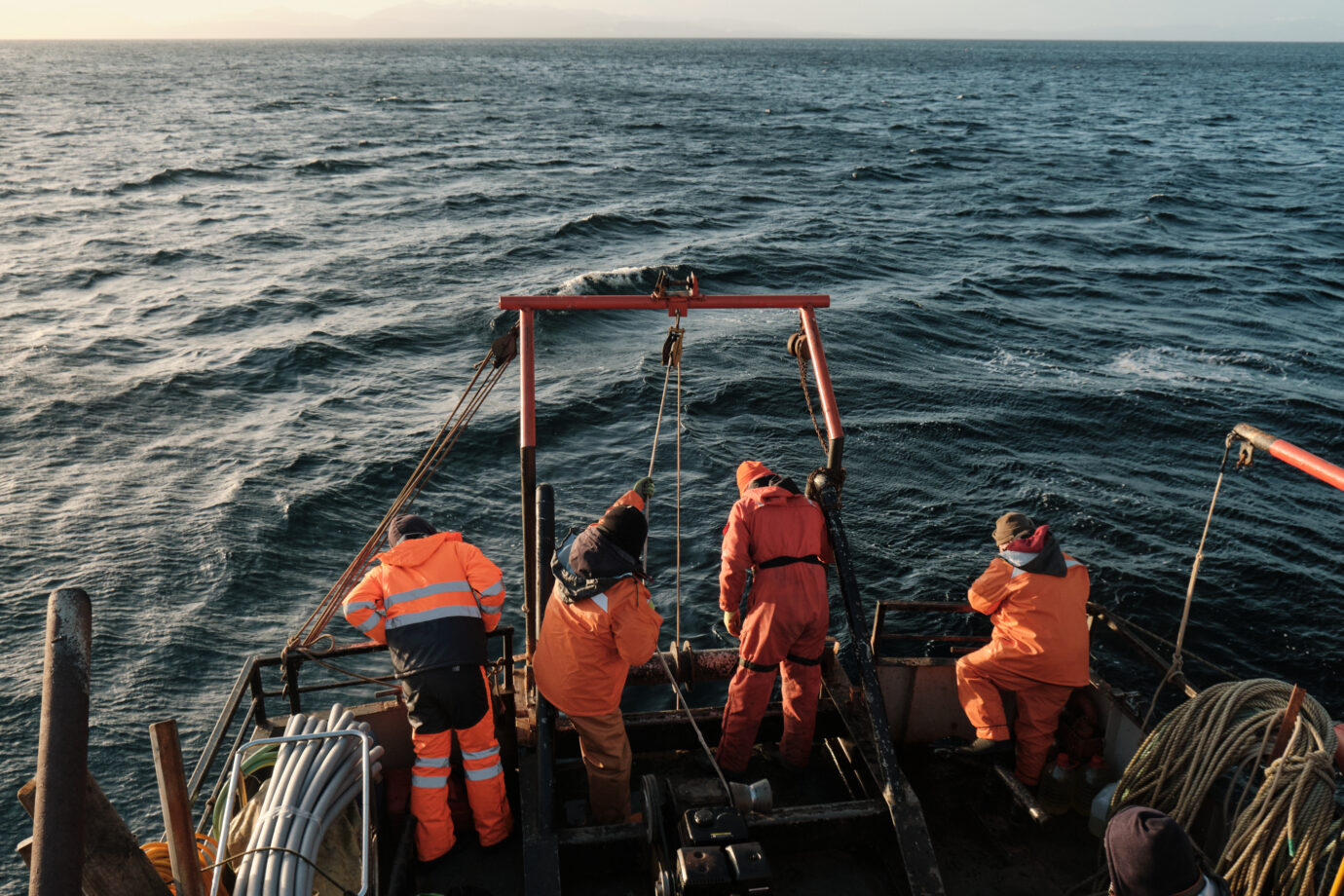
With the support of various organizations, since 2021 we have carried out more than 15 expeditions across the Los Lagos, Aysén, and Magallanes regions, in collaboration with institutions including the Universidad Austral de Chile, CADIC-Conicet de Ushuaia (Argentina), Universidad de Los Lagos, the Spanish Institute of Oceanography, and the Universidad de Magallanes, among others. We are identifying and documenting biodiversity hotspots to deepen our understanding of marine community structure and how it is shaped by environmental variables. We also map threats and monitor the environmental condition of unique and understudied habitats.

This unprecedented characterization of fragile and valuable ecosystems will allow us to build the scientific and technical case for proposing the creation of marine protected areas along the Route of Parks of Patagonia.
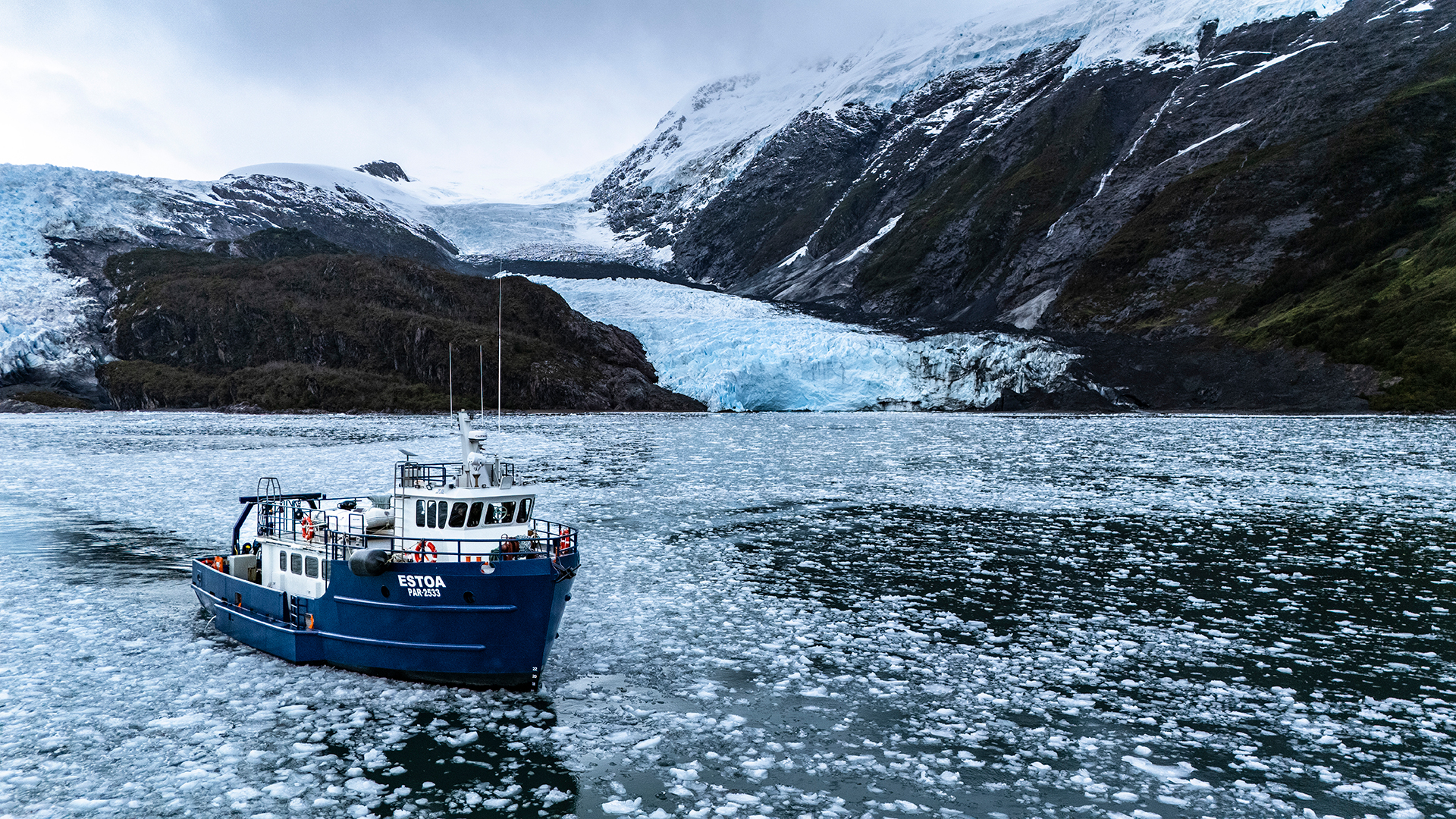
Photo: Nicolás Muñóz for Rewilding Chile

Our goal

We want to establish a network of Marine Parks along the Route of Parks of Patagonia that ensures the conservation and connectivity of marine ecosystems, protecting marine biodiversity from existing and emerging threats.

In particular, we are working to protect Macrocystis pyrifera kelp forests —known locally as huiro—by establishing, in the medium term, a permanent conservation designation as a Natural Monument.
Cabo Froward | Foto: José Tomás Yakasovic para Rewilding Chile

OUR AREAS OF WORK

Scientific research in priority conservation areas

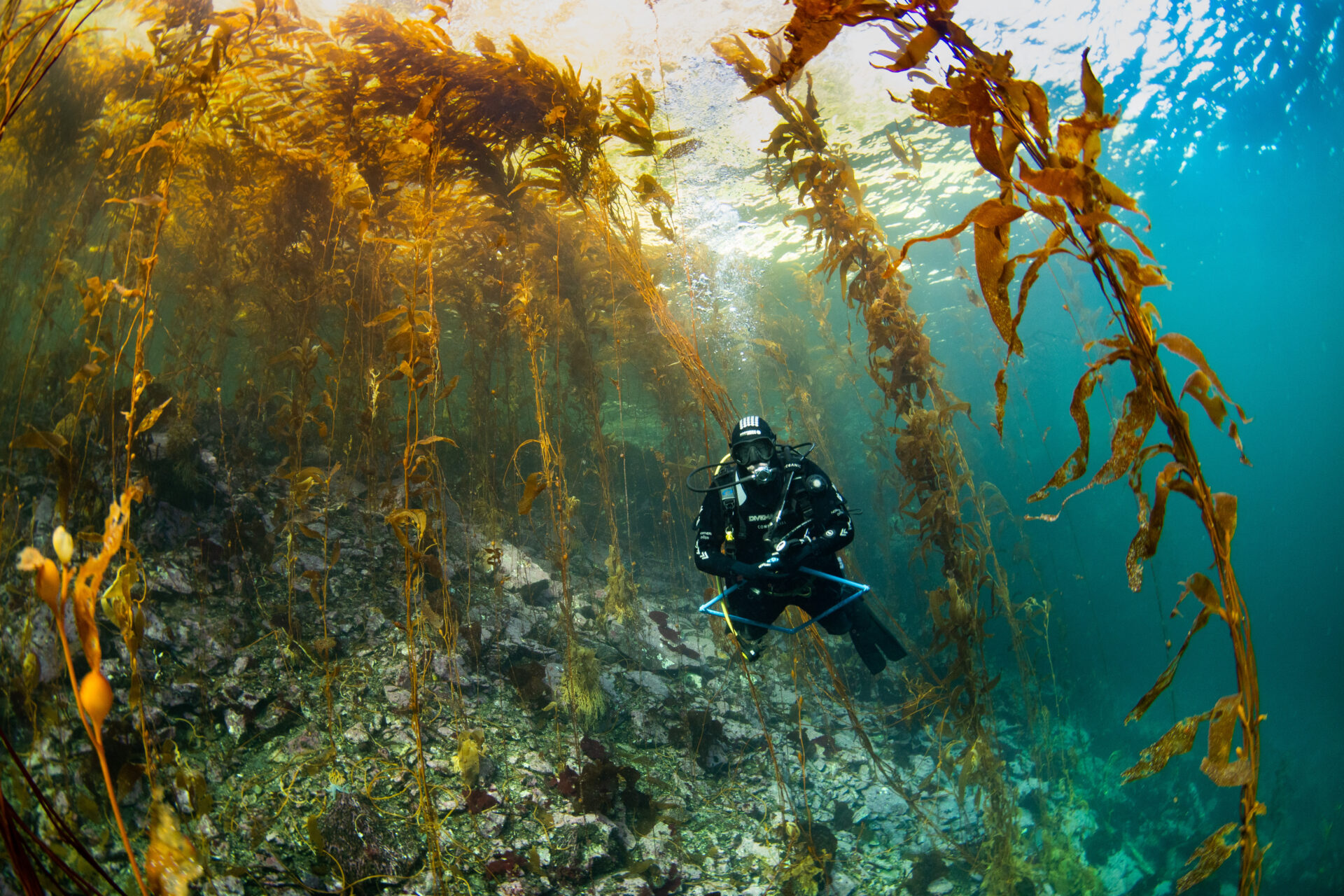
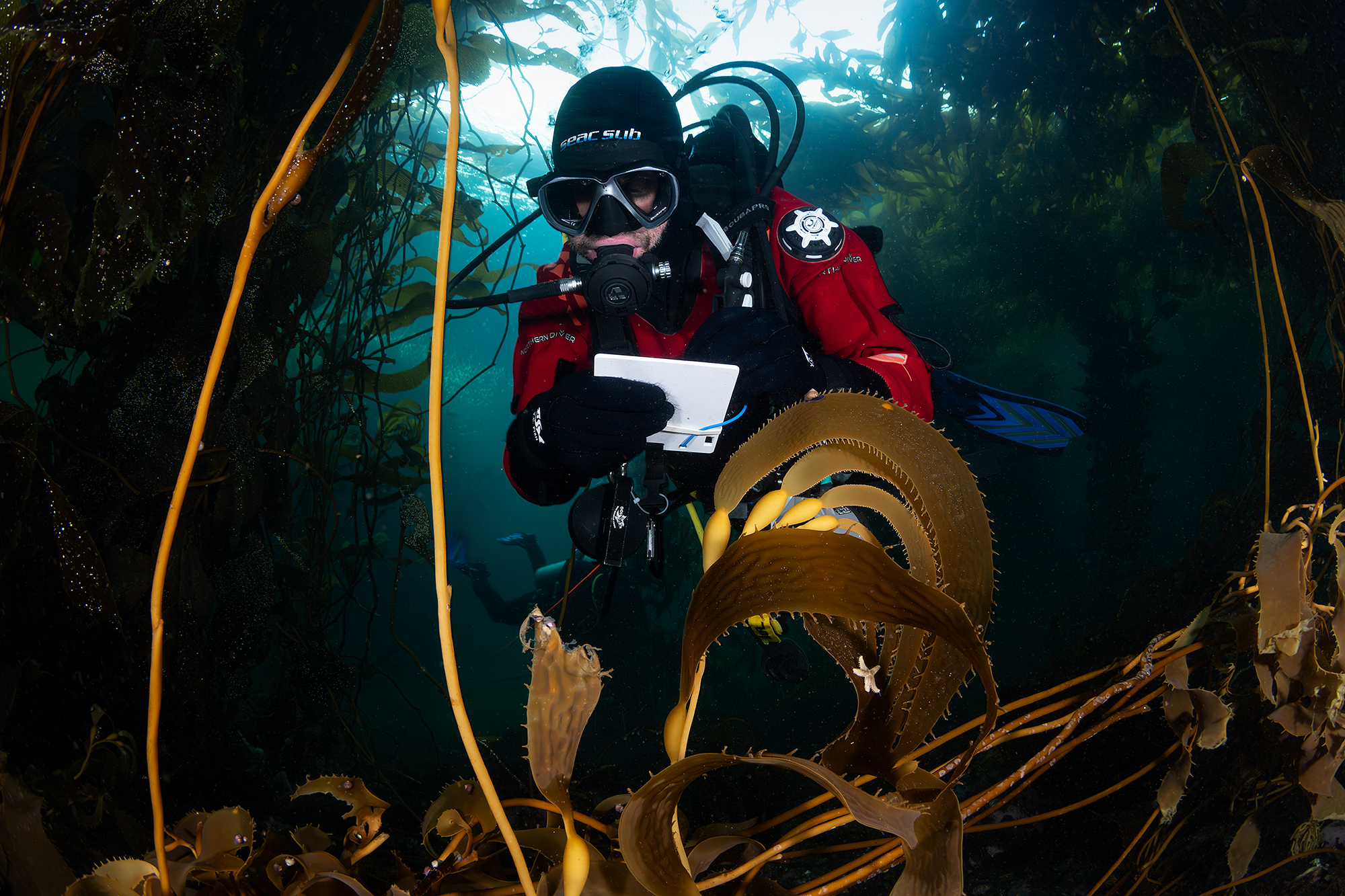
  • Comau Fjord (Palena Province, Los Lagos Region) —where the Foundation has nearly 30 years of history, crowned by the creation of Pumalín Douglas Tompkins National Park. Our studies of the benthic fauna in Comau Fjord have revealed cold-water corals at depths of just 10 to 15 meters —corals that elsewhere in the world are only found at far greater depths. We have also documented how kelp (Macrocystis pyrifera) populations sustain their vital functions within Patagonia’s channels and fjords, despite high environmental variability. Additionally, we have recorded regular sightings of the broadnose sevengill shark, classified as vulnerable by the IUCN.
  • Bahía Inútil (Tierra del Fuego Province, Magallanes and Chilean Antarctica Region) —the only large-scale system within the Magallanes Ecoregion that has no protection whatsoever (Ministry of the Environment, 2016). It is a critical feeding area for fish, squid, and crustaceans that sustain Chile’s only colony of King Penguins (Aptenodytes patagonicus), which breed and reside there year-round. The most remarkable find of 2026 was the first record for Chile of the fan alga (Microzonia velutina), living at depths of 3 to 6 meters — a discovery that extends the known distribution range of this species within the sub-Antarctic ecosystem and reaffirms Tierra del Fuego as a key biogeographic region for macroalgae diversity. We also found a larval icefish (Champsocephalus esox), an endemic species classified as vulnerable by the IUCN; the specimen was added to the collection of the National Museum of Natural History as the first early-stage individual ever documented by science.
  • Cape Froward (Magallanes Province, Magallanes and Chilean Antarctica Region) —the coastal marine zone surrounding Cabo Froward, the southernmost point of the American continent, is home to the most pristine Macrocystis pyrifera forests on Earth —virtually unchanged from how Charles Darwin described them 200 years ago. This ecologically significant area sits at the convergence of different water masses, giving it a unique character and exceptional biological richness, with diverse taxonomic groups including algae, fish, marine mammals, seabirds, and benthic communities.

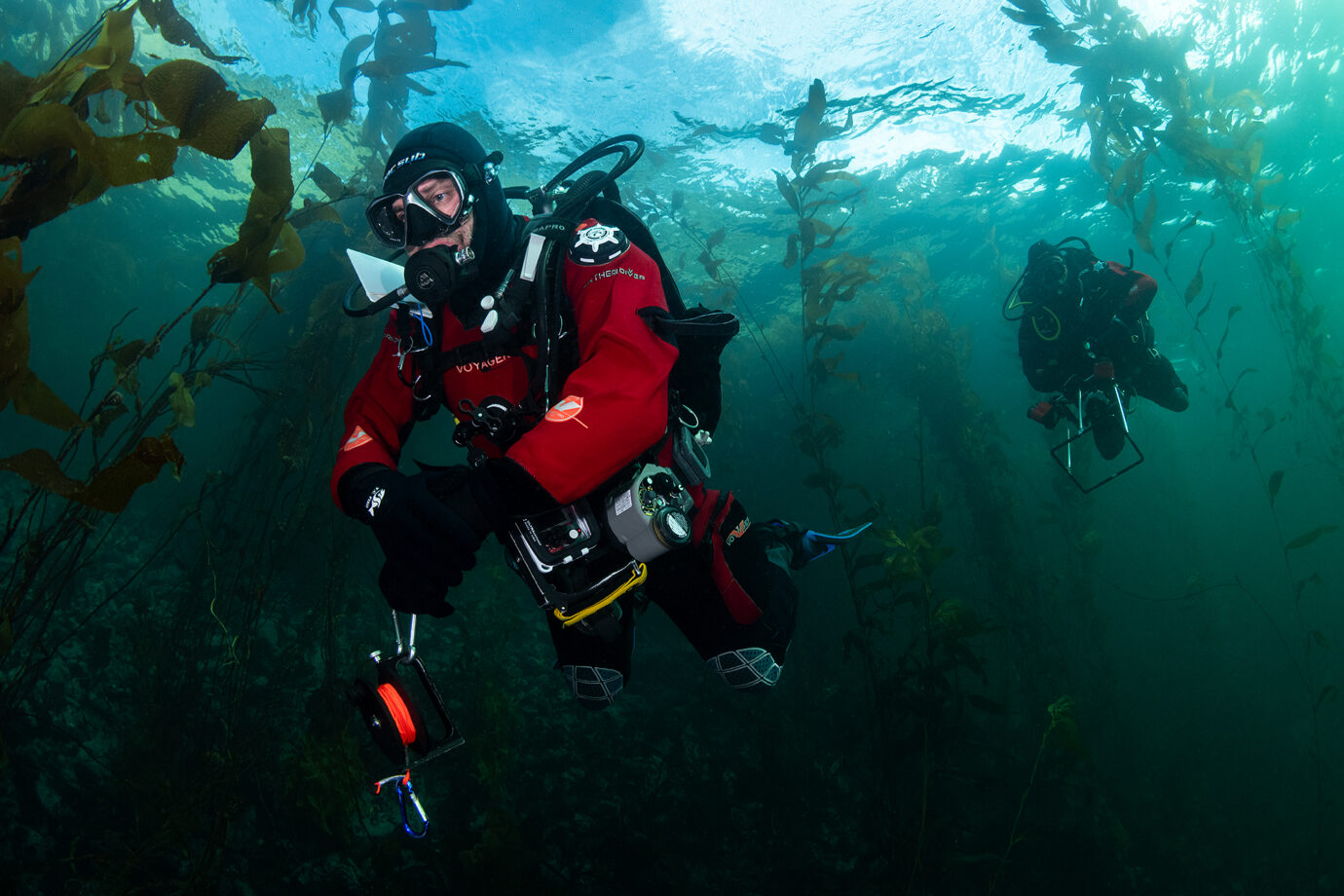
Mathías Hüne, Marine Program Director of Rewilding Chile | Photo: Eduardo Sorensen

Patagonia Megatransect

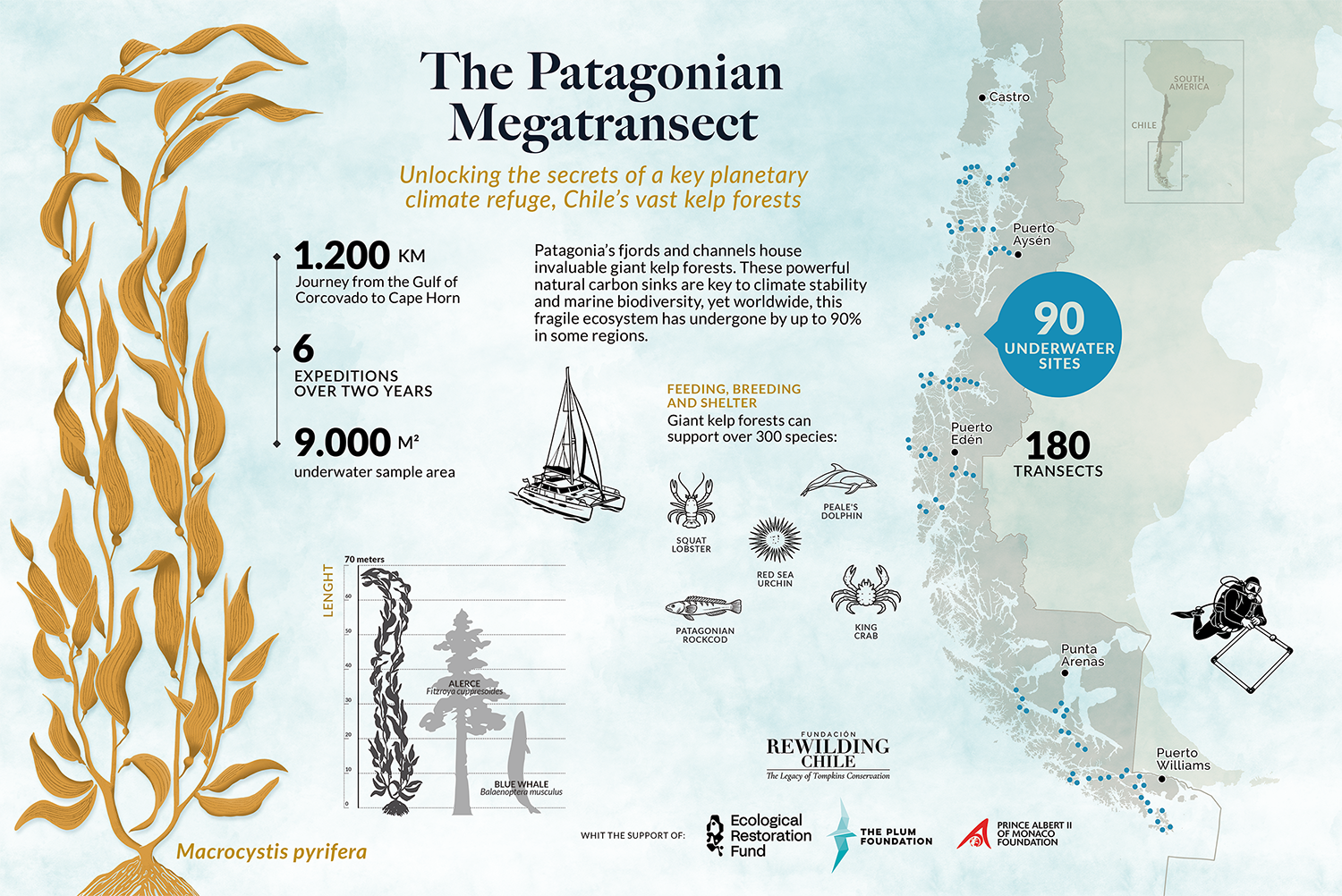
  • Together with a multidisciplinary team of Chilean and international professionals, and with the support of the Plum Foundation, we have embarked on one of the most ambitious marine research projects ever undertaken in Chile. Over two years and six expeditions, we will cover more than 1,200 kilometers between the Gulf of Corcovado and Cape Horn, stopping at 90 sampling points to assess the condition of Macrocystis pyrifera forests, determine their carbon capture capacity, and document the biodiversity associated with them. Unique of its kind, this research will take us into the depths where these giants live — reaching up to 80 meters in height and recognized as one of the most efficient natural carbon sinks on the planet, capable of storing up to 20 times more carbon than terrestrial forests, making them a vital tool in mitigating the impacts of climate change. This project will generate knowledge at both spatial and temporal scales about the carbon capture capacity of these kelp forests — knowledge that is essential for the conservation and protection of Chilean Patagonia’s vast marine ecosystem.

DISCOVER SOME OF OUR MARINE EXPEDITIONS

Related news

First record of “Fan Algae” reported for Chile on the Isla Grande of Tierra del Fuego

Creation of Parks

Chilean research reveals surprising local adaptations of giant kelp in Comau Fjord

Creation of Parks

Scientists publish first-ever characterization of marine biodiversity in Inútil Bay, Tierra del Fuego

Creation of Parks

The discovery of rare red hydrocorals forests offers new insight into Chile’s little-known patagonian sea and a call for its protection

Creation of Parks

Expedition to Bahía Inútil: discovering its unknown ecological value

Creation of Parks

Beagle Channel: Exploring the end of the world

Creation of Parks