Photo: Mathias Hüne
The Marine Program of Rewilding Chile, in collaboration with the Universidad Austral of Chile, has discovered how populations of Macrocystis pyrifera adapt to survive and maintain vital functions in the highly variable environmental conditions of Patagonia’s fjords and channels.
Photo: Mathias Hüne
Comau Fjord stretches 42 miles from the Gulf of Ancud to Caleta Leptetu, bordering Pumalín Douglas Tompkins National Park in southern Chile. Surrounded by steep mountains, this narrow sea inlet is home to red corals, mussels, fish such as the Patagonian blenny and cabrilla, marine otters, and even some of the most ancient shark species on the planet.
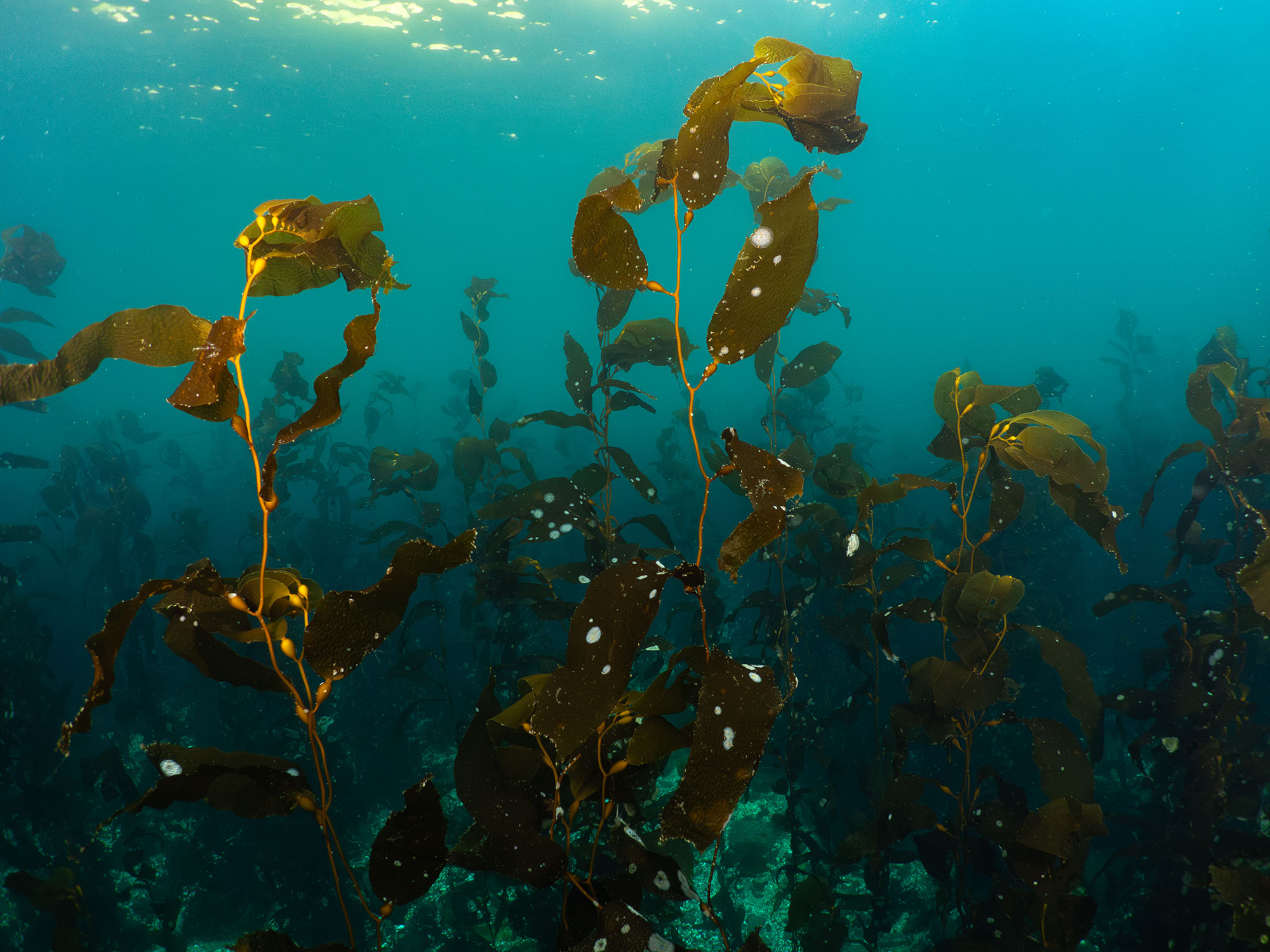
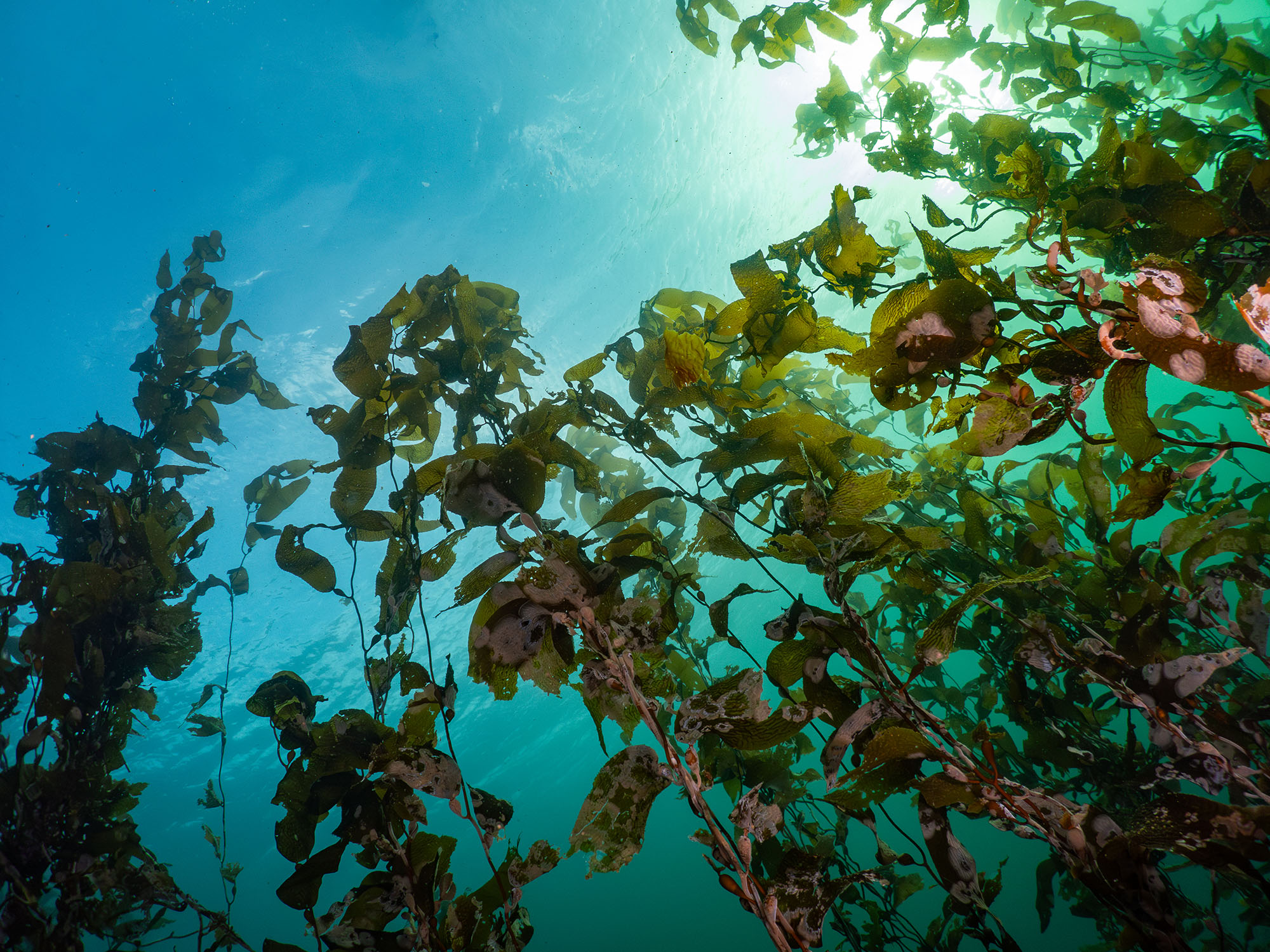
Within this remarkable biodiversity hotspot, forests of giant kelp (Macrocystis pyrifera), locally known as “huiro” or “sargazo,” play a key ecological role. They provide food, breeding grounds, and shelter for a wide variety of marine species. Globally, kelp forests are also gaining attention as carbon sinks and as indicators of ocean resilience in the face of the climate crisis.
Research led by Fundación Rewilding Chile’s Marine Program, in collaboration with the Laboratory of Algal Photobiology at the Faculty of Sciences of the Universidad Austral de Chile, has revealed for the first time how populations of Macrocystis pyrifera adapt to survive and remain functional in an environment marked by strong environmental variability. The study, titled “First photosynthetic characterization of the giant kelp Macrocystis pyrifera from the Comau Fjord, Northern Patagonia region,” was published in the prestigious scientific “Journal of Applied Phycology”. The authors are Mauricio Palacios, Iván Gómez, and Mathias Hüne.
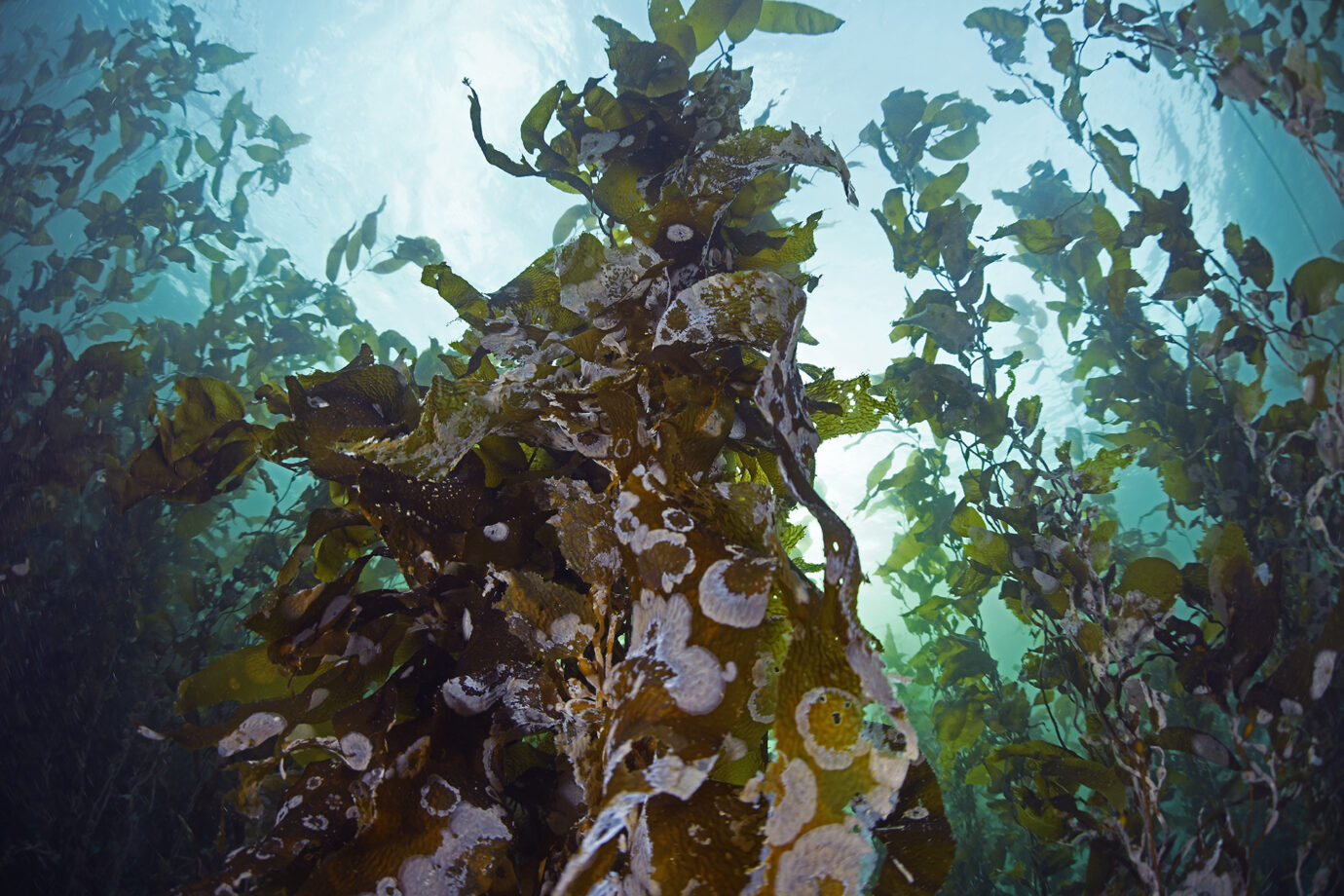
“The results reveal a surprising phenomenon of local adaptation that had not been previously described for this group of brown macroalgae in northern Patagonia,” explained Mathias Hüne, Director of the Marine Program. “While kelp in more open areas grow larger and accumulate greater biomass—forming extensive forests—those in the inner fjord, where light is scarce, develop wider blades that optimize the capture of solar radiation.”
Photosynthesis measurements confirmed that these macroalgae adjust their metabolic activity to low-light conditions, which are common in the inner fjord. This allows them to use available solar radiation more efficiently—an essential requirement for photosynthesis. This strategy becomes particularly important in autumn, when solar radiation can decrease by up to 24 percent.
Mauricio Palacios, Associate Researcher at Fundación Rewilding Chile, noted: “In Chile’s Marine Protected Areas (MPAs), kelp forests—especially Macrocystis pyrifera—are key conservation targets. They are among the most important and cross-cutting conservation features in most MPAs. These forests are considered among the most resilient in the world, which is why Patagonia is seen as a major climate refuge. It is essential to continue research that helps us understand their role in marine biodiversity conservation and global climate change mitigation.”
“The results reveal a surprising phenomenon of local adaptation that had not been previously described for this group of brown macroalgae in northern Patagonia. While kelp in more open areas grow larger and accumulate greater biomass—forming extensive forests—those in the inner fjord, where light is scarce, develop wider blades that optimize the capture of solar radiation.”
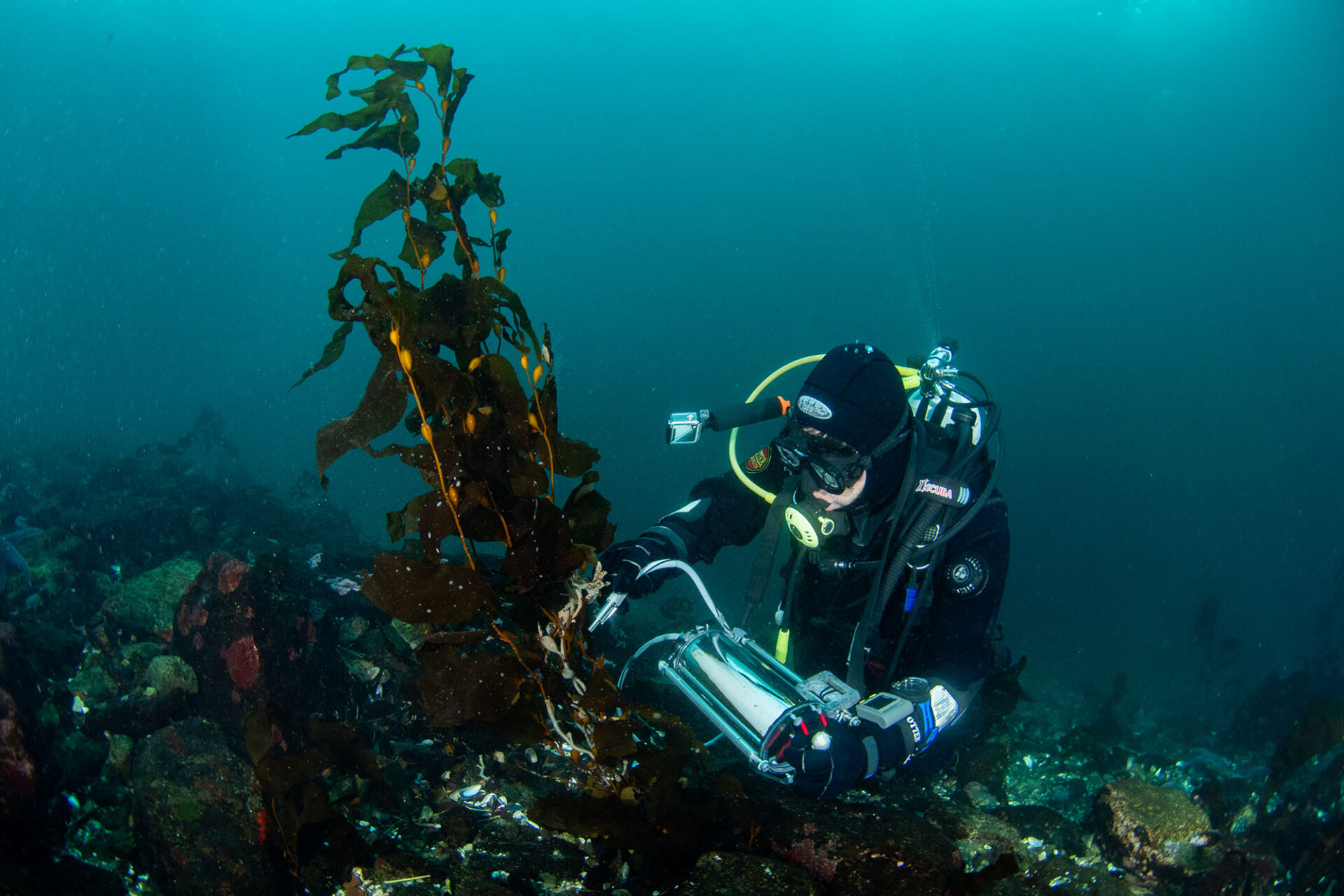
The research team conducted fieldwork throughout the fjord and surrounding areas, combining physiological and morphological studies of Macrocystis pyrifera forests. Using scuba diving and non-destructive monitoring techniques—such as photo quadrats and remote underwater video cameras—they also documented mesophotic communities at depth and the fish assemblages associated with these habitats across 11 sampling stations. They measured water-column conditions, including temperature, salinity, and pH.
The study also warns about the vulnerability of Comau Fjord, which faces growing pressure from climate change and human activities such as aquaculture and unregulated tourism. “Because it is a semi-enclosed system, changes in temperature or excess nutrients can seriously affect the stability of these underwater forests, which are crucial for Patagonia’s marine biodiversity,” Hüne explained. For example, global warming has facilitated harmful algal blooms (HABs), with severe consequences for marine ecosystems.